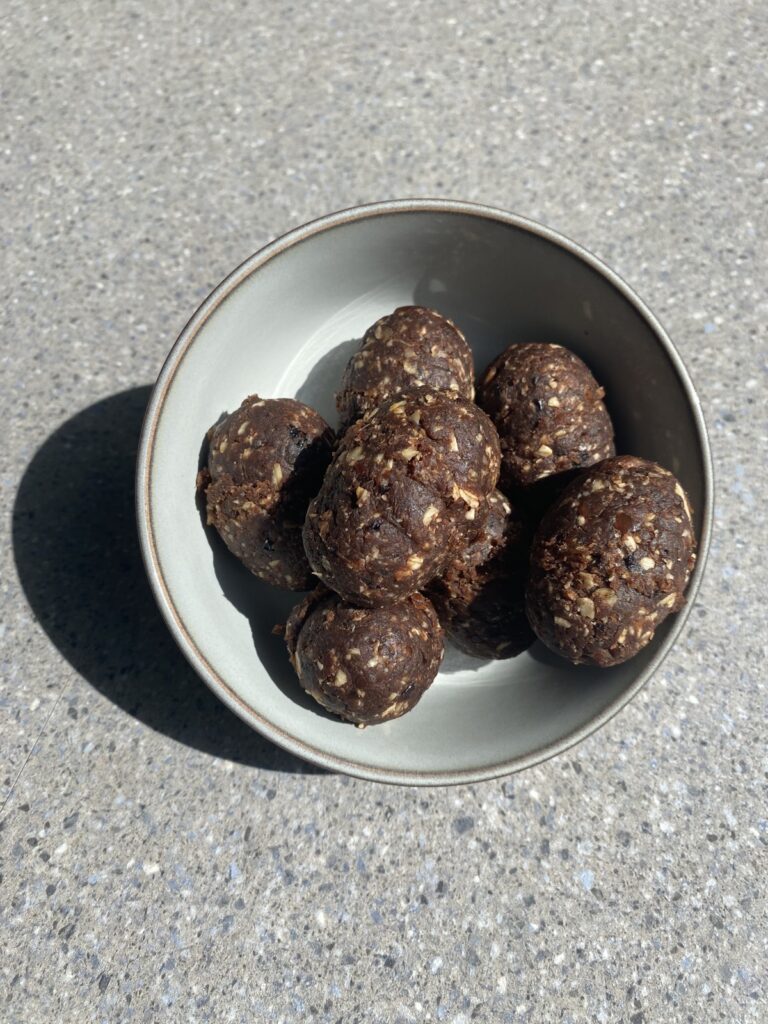
The newest flavour in the power ball family: carob. Most people who taste one at the market in Almere first say “tasty, chocolate” — and then look surprised when I tell them the base isn't cocoa but carob. My trick: two parts carob, one part cocoa. This is the recipe as I make them myself.
What is carob, actually?
Carob (locust bean) comes from the pods of the carob tree, which grows around the Mediterranean — in Turkey, where my family comes from, it's called keçiboynuzu and we've eaten it for generations. The pods are dried, roasted and ground into a powder that looks surprisingly like cocoa, with two big differences: carob is naturally sweet, and it contains by itself no caffeine or theobromine. In these balls I combine it with a little cocoa powder (2:1) — that gives you the full, deep flavour of chocolate, with much less caffeine than dark chocolate.
Why this ball works
Because carob is already sweet, these balls need little else: dates and raisins do the rest of the sweetening, peanut butter makes them smooth and oats give them bite. No refined sugar — just carob with a touch of cocoa for that deep, dark flavour.
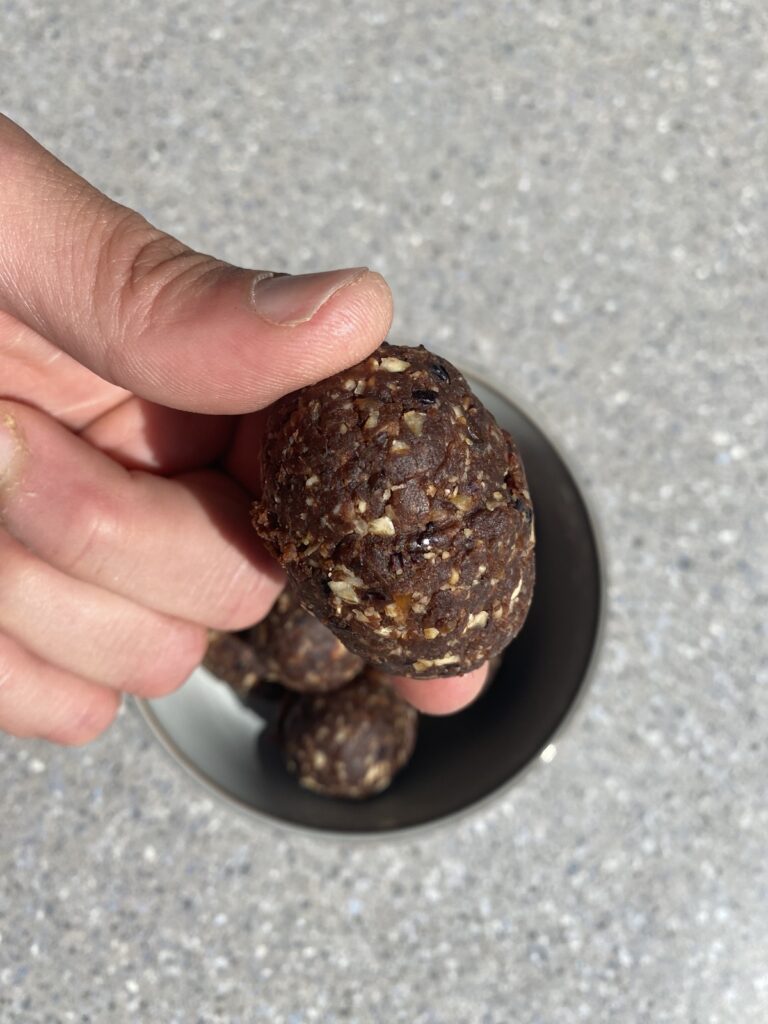
Two things that make the difference
One: don't grind the oats too fine — 20 seconds is enough. You want coarse flour with some structure, not powder. Two: check the mixture before rolling. Squeeze a little between your fingers: if it falls apart, 1–2 extra dates are enough to save it.
Allergens
These balls contain peanuts and oats. I make them with gluten-free oats, but they're made without gluten-containing ingredients in a kitchen where bread is also made — so traces of gluten may be present due to environmental contact. Not recommended for people with coeliac disease or severe gluten allergy.
Prefer ready-made?
Every Saturday the power balls are fresh at the market in Almere (Stadhuisplein), and you can order them in the webshop in boxes of 4 or 10: see the Power Balletjes. Questions about the recipe? Ask them on Instagram @adabakesnl — I read everything myself.